Suddenly, your lights flicker, then plunge into darkness. The hum of your appliances vanishes. A power outage in San Diego often brings a mix of frustration and uncertainty. Knowing what to do in those first few moments can make a big difference for your safety and the integrity of your home’s electrical system.
First: check if it’s just your house
When the power goes out, your first thought might be that the entire neighborhood is affected. However, it’s essential to quickly determine if the problem is localized to your home or if it’s a broader outage. This distinction guides your next steps and helps you contact the right professionals if needed.
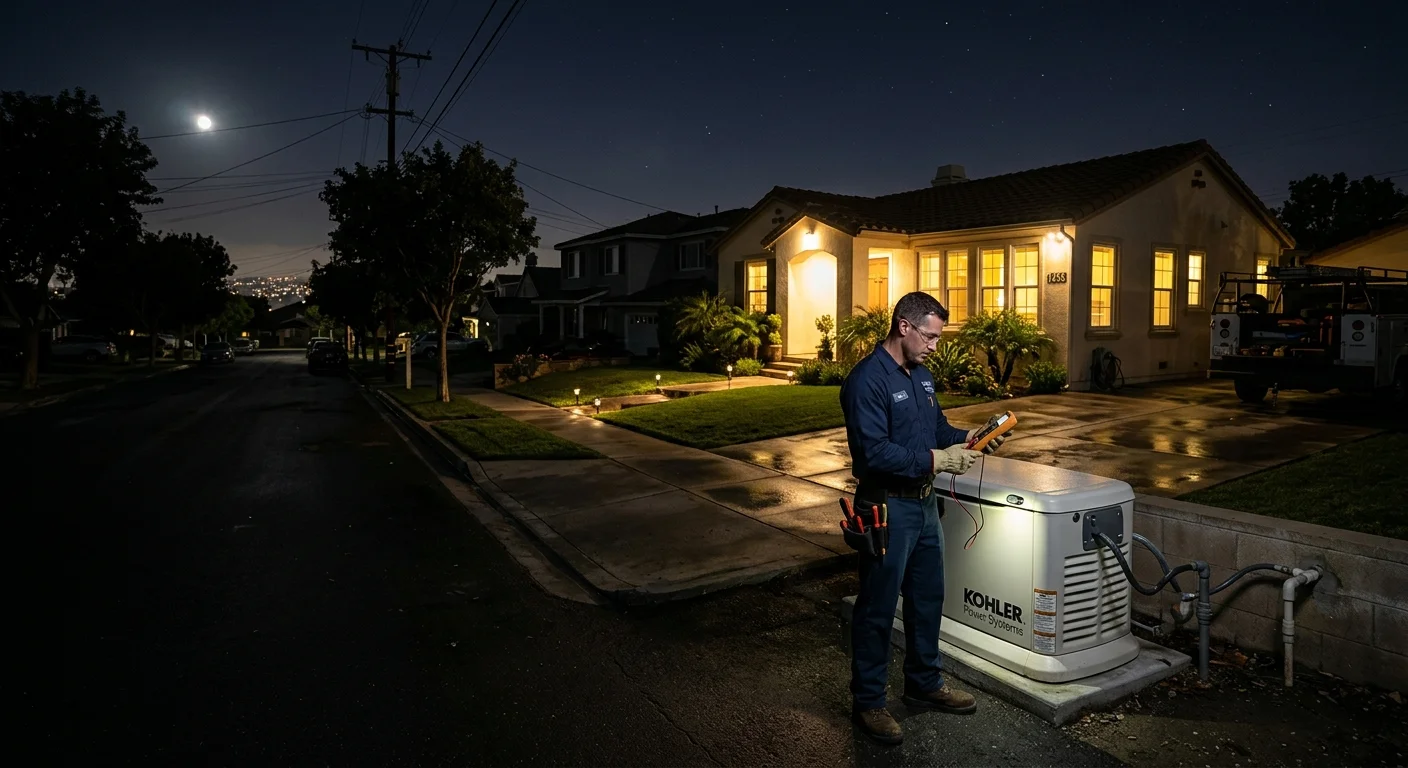
Start by looking outside. Can you see lights on at your neighbors’ houses? If their homes are lit up and yours is dark, the issue likely originates within your electrical system. In this scenario, your main electrical panel is the first place to check. Sometimes, a single tripped circuit breaker or a main breaker that has flipped can cut power to parts or all of your home. A tripped breaker usually indicates an overload on a specific circuit, while a main breaker trip suggests a larger fault or surge.
If your neighbors’ homes are also dark, it points to a wider service interruption. This means the problem isn’t with your home’s wiring but rather with the utility’s power grid. In San Diego, that utility is San Diego Gas & Electric (SDG&E). Understanding this initial difference helps you avoid unnecessary troubleshooting and ensures you reach out to the correct authority for assistance. You wouldn’t want to call an electrician for a widespread grid issue, just as you wouldn’t expect SDG&E to fix a problem inside your home’s breaker panel.
How to check the SDG&E outage map
Once you’ve determined that the outage extends beyond your property, your next step is to consult the official source for information: the SDG&E outage map. This online tool provides real-time updates on service disruptions across San Diego County, giving you a clearer picture of the situation. It helps you confirm if your area is part of a larger outage, estimate restoration times, and understand the cause of the disruption if known.
To access the map, simply visit the SDG&E website on a device with internet access – your smartphone is usually the best option during an outage. Look for the “Outage Center” or “Outage Map” link. The map displays color-coded areas indicating active outages, the number of affected customers, and often an estimated time of power restoration. You can zoom in on your specific neighborhood or enter your address to get localized information.
Keep in mind that while the map is updated frequently, initial reports can sometimes be delayed or estimated. It’s a valuable resource for general information, but specific restoration times might shift as crews work to identify and repair the issues. The map also allows you to report an outage if yours isn’t already listed, helping SDG&E track and address problems more efficiently. Having this information helps you plan your activities during the outage and manage expectations about when the power will return.
When to call SDG&E vs. an electrician
Understanding the clear division of responsibility between SDG&E and a licensed electrician like Bright Pro Electric is crucial during a power outage. This distinction ensures you contact the right professional for your specific problem, saving time and potentially avoiding unnecessary service calls.
Call SDG&E when: The power outage affects your entire neighborhood, or your neighbors’ homes are also dark. This indicates a problem with the main power lines, transformers, or other infrastructure managed by the utility. You should also contact SDG&E if you see downed power lines, damaged utility poles, or any other signs of damage to their equipment. These situations are dangerous, and you should never approach utility equipment yourself. You can report these issues directly through the SDG&E outage map or by calling their customer service line. SDG&E is responsible for everything from the utility pole up to the service drop connection point on your home.
Call Bright Pro Electric when: The power outage is isolated to your home, or parts of your home, while your neighbors still have power. This suggests an issue within your private electrical system, which SDG&E is not responsible for. Common signs include tripped main breakers, a section of your home losing power, or if power is restored to the neighborhood but not to your house. An electrician can diagnose and repair problems with your electrical panel, circuit breakers, wiring, and other internal components. If you suspect an electrical problem inside your home is causing a partial or complete outage, don’t hesitate to call for professional help. Our team provides expert emergency electrical services across San Diego County.
Safely unplugging electronics to prevent surge damage
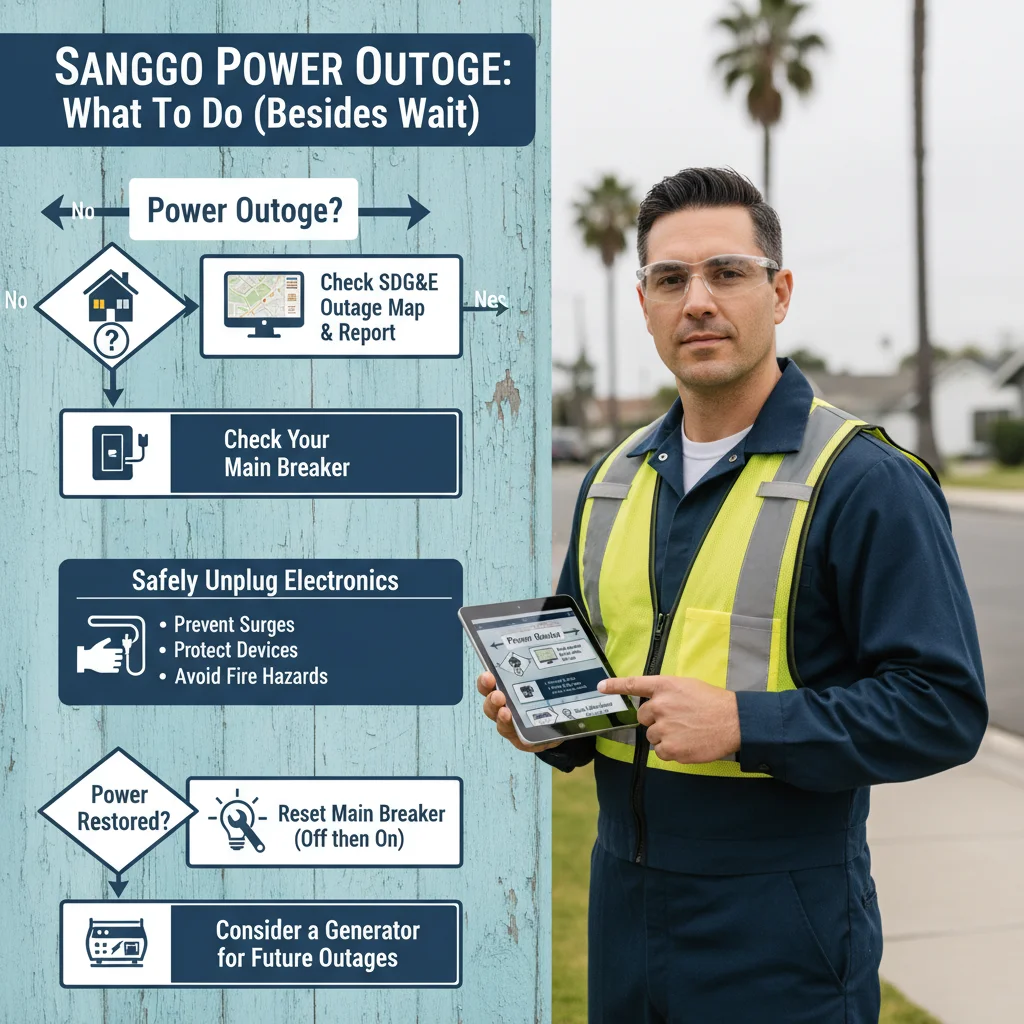
One of the most important protective measures you can take during a power outage is to safely unplug your sensitive electronics. While the immediate loss of power is inconvenient, the real danger to your devices often comes after the power is restored. Power surges are sudden, brief increases in voltage that can occur when electricity comes back on, especially after a prolonged outage or when there’s an issue with the power grid. These surges can damage or even destroy expensive electronics, appliances, and even entire electrical systems.
To protect your equipment, walk through your home and unplug computers, televisions, gaming consoles, smart home hubs, and any other delicate electronic devices. You do not need to unplug larger appliances like refrigerators or washing machines, as they are generally built to withstand minor fluctuations. However, for maximum protection, consider unplugging everything sensitive. This simple action isolates your devices from potential surges.
For long-term protection against surges, consider investing in whole-home surge protectors. These devices are installed directly at your electrical panel by a licensed electrician and provide a much higher level of protection than individual power strips. While individual surge protector strips are good for specific devices, a whole-home system safeguards everything connected to your electrical system. This proactive measure prevents future surge damage, whether from an outage or other grid instability.
Resetting your main breaker after power is restored
Once power has been restored to your neighborhood, you might find that some or all of your home still remains dark. This often means your main circuit breaker or individual breakers have tripped during the outage or when power initially came back on. Resetting them is usually a straightforward process, but it requires careful attention to safety.
First, locate your main electrical panel. This is typically a grey metal box found in your garage, basement, utility closet, or outside wall. Before you open it, make sure your hands are dry, and you’re standing on a non-conductive surface. Inside the panel, you’ll see a series of switches, which are your circuit breakers.
To reset a tripped main breaker (which is often a larger switch at the top or bottom of the panel), you usually need to switch it fully to the “off” position first, and then firmly back to the “on” position. Sometimes, a tripped breaker will rest in a middle position; you must push it all the way to “off” before flipping it “on.” For individual circuit breakers that might have tripped, follow the same off-then-on procedure. If a breaker trips immediately after being reset, do not attempt to reset it again. This indicates a persistent electrical fault or overload, which requires the attention of a qualified electrician. Repeatedly resetting a tripping breaker can be dangerous and could cause damage to your electrical system or devices.
How a generator or backup system prevents this
While knowing how to respond to a power outage is essential, a proactive approach can help you avoid the disruption entirely. A whole-home generator or backup battery system offers continuous power, ensuring your San Diego home remains lit, comfortable, and functional even when the rest of the grid goes dark.
A standby generator typically runs on natural gas or propane and automatically kicks on within seconds of detecting a power outage. It connects directly to your home’s electrical panel via an automatic transfer switch, which safely disconnects your home from the utility grid before connecting it to the generator. This means you won’t need to manually start it or run extension cords. Your lights, HVAC, refrigerator, and critical medical equipment will continue to operate seamlessly. This provides peace of mind, especially during long outages or during Public Safety Power Shutoffs (PSPS) events, which can occur in San Diego County to prevent wildfires. You can learn more about preparing for these events by reading our guide on PSPS shutoffs and generators.
Backup battery systems, like those paired with solar installations, offer a quiet, emission-free alternative. They store excess solar energy or charge from the grid when electricity is cheap, then discharge power to your home during an outage. Both generators and battery backup systems require professional installation to ensure they meet local codes and operate safely and efficiently. Investing in a generator installation is a significant step towards energy independence and uninterrupted comfort for your home.
When to call us
If your power outage is isolated to your home, if breakers repeatedly trip, or if you need assistance installing or maintaining a backup power system, a licensed electrician is your best resource. We handle everything from complex electrical troubleshooting to seamless generator installations. Call us at (858) 925-5546 for a same-day estimate.