Thinking about turning your San Diego home into a smart home? You’re likely picturing voice-activated lights, automated thermostats, and smart locks that make daily life easier. But before you fill your shopping cart with the latest gadgets, it’s essential to understand that a truly reliable smart home starts not with devices, but with its electrical foundation. Trying to build a smart home on outdated or insufficient wiring often leads to frustrating glitches, dropped connections, and devices that just do not work right.
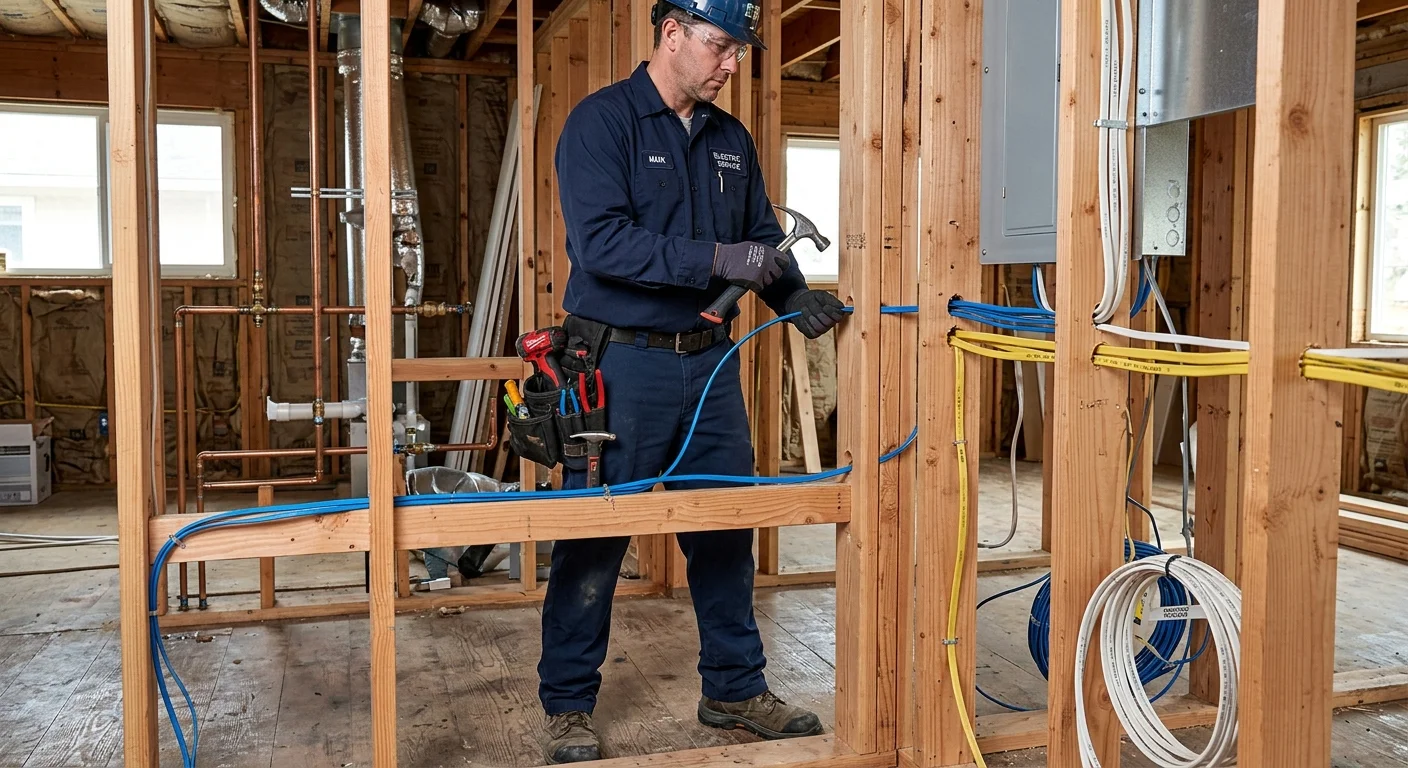
Many homeowners in San Diego jump straight to buying smart devices, only to find their existing electrical system can’t quite keep up. The result? Sporadic connectivity, power issues, or the realization that certain smart features are simply incompatible with their home’s current setup. A professional electrician specializing in smart home wiring can prevent these headaches by ensuring your home has the robust electrical infrastructure needed to support today’s — and tomorrow’s — smart technology. We focus on building the electrical backbone that makes your smart home dreams a reliable reality.
Why your smart home starts with wiring, not just devices
It’s easy to get excited about smart speakers and automated blinds. Those are the visible parts of a smart home. However, thinking of a smart home like any other structure means recognizing the foundation comes first. You wouldn’t build a beautiful custom home on a cracked slab, and you shouldn’t try to power a complex smart home system with an inadequate electrical foundation. This foundational thinking is especially important in San Diego, where many homes have older wiring that wasn’t designed for the demands of modern electronics.
Every smart device, from a dimmable light switch to a smart thermostat, relies on a steady and sufficient supply of power and, in many cases, a stable data connection. Wi-Fi signals can get weak, and older wiring can introduce voltage drops or interference that disrupt device performance. When your smart home infrastructure is professionally installed, it ensures each device receives the power and connectivity it needs to function flawlessly. This prevents constant troubleshooting, device resets, and the kind of unreliable performance that makes smart technology feel more like a chore than a convenience. Investing in proper smart home wiring upfront saves you significant frustration and expense down the road. It provides the hidden framework that makes your visible smart gadgets shine.
Adding neutral wires for smart switches
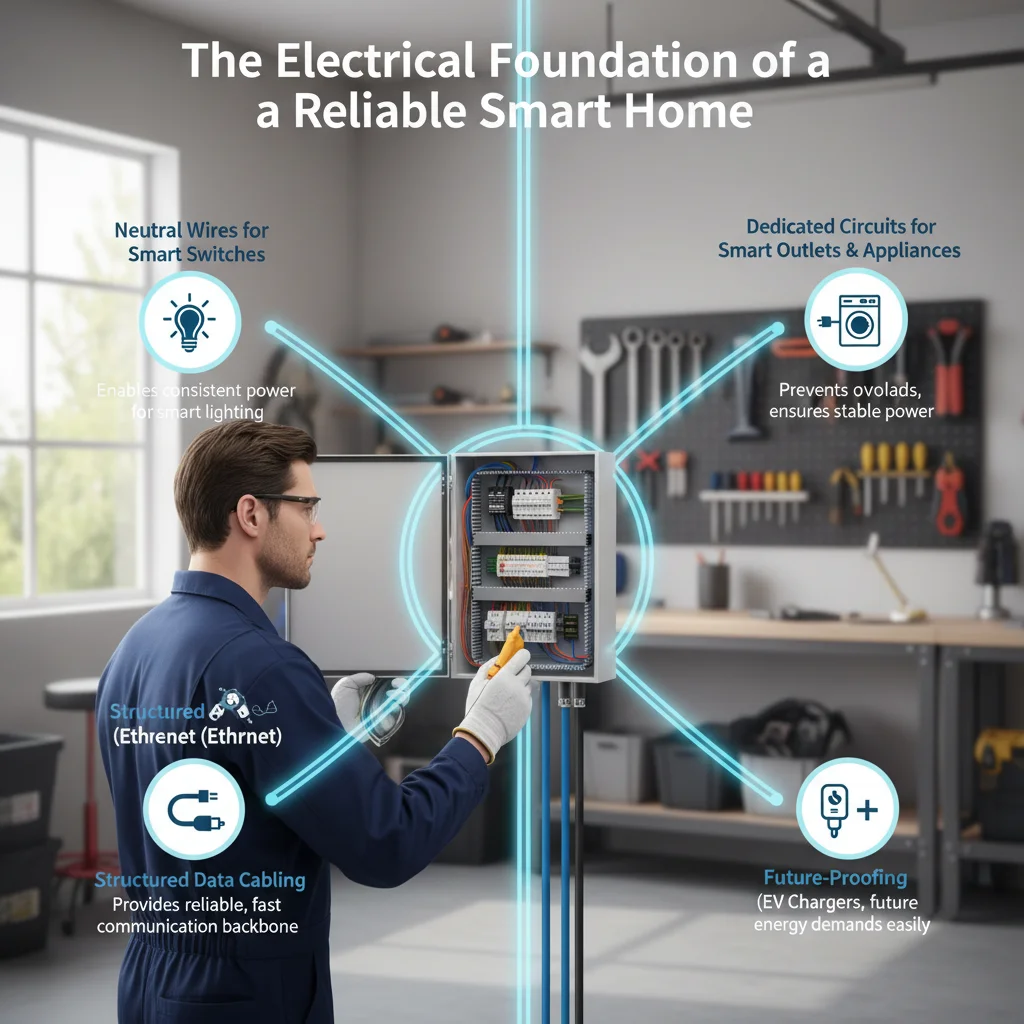
One of the most common hurdles for homeowners installing smart switches in older San Diego properties is the lack of a neutral wire in the switch box. Many traditional light switches simply interrupt the hot wire, meaning they only have hot and load wires present. For decades, this setup was perfectly sufficient. However, most modern smart switches need a constant, low-power electrical connection to run their internal electronics, maintain Wi-Fi connectivity, and respond to commands even when the light is off. This continuous power supply comes from the neutral wire.
Without a neutral wire, a smart switch might try to “steal” power from the load wire, which can cause issues like flickering lights, buzzing sounds, or the switch simply failing to operate correctly. While some “no-neutral” smart switches exist, they often come with limitations, such as compatibility only with specific bulb types or requiring a capacitor bypass installed at the light fixture, which can add complexity. For optimal performance, reliability, and the widest range of smart switch options, having a neutral wire run to each switch box is highly recommended. Our electricians can assess your existing wiring and safely install the necessary neutral wires, bringing your home up to modern smart home standards. We can help you understand the specifics of this wiring and its impact on your choice of devices; you can read more about options for a smart switch with no neutral wire in our detailed guide.
Installing smart outlets and dedicated circuits
Smart outlets are another cornerstone of a connected home, allowing you to control power to lamps, appliances, and chargers remotely, or even monitor energy usage. While many plug-in smart outlets are available, professionally installed smart outlets offer a cleaner look and deeper integration into your home’s electrical system. These integrated outlets provide reliable power and control for devices that stay plugged in, from coffee makers to charging stations.
Beyond standard smart outlets, many smart homes benefit significantly from dedicated circuits. A dedicated circuit is an electrical circuit that serves only one outlet or appliance, ensuring that device has its own direct power supply from the electrical panel. This is critical for high-draw smart appliances like smart refrigerators, washing machines, or entertainment centers with multiple smart devices. It prevents overloading circuits, which can trip breakers and disrupt your entire smart home network. For instance, if you plan to install a sophisticated home theater system with smart TVs, soundbars, and streaming devices, a dedicated circuit guarantees stable power without interference from other household loads. A smart outlet installation in San Diego often involves assessing whether a dedicated circuit is a good idea. This proactive approach ensures your sensitive electronics are protected and perform at their best, giving you peace of mind that your smart investments are safe and reliable.
Planning for future needs: EV chargers, smart appliances
Building a smart home isn’t just about what you need today; it’s about anticipating what you’ll need tomorrow. Technology evolves quickly, and your electrical infrastructure should be ready for it. For many San Diego homeowners, this future includes electric vehicles. Installing an EV charger at home is becoming increasingly common, and these chargers require dedicated, high-power circuits. Planning for an EV charger during a remodel or new build allows us to properly size your electrical panel and run the necessary conduit and wiring efficiently, saving you considerable cost and disruption later.
Beyond EV chargers, consider other smart appliances or systems you might add. Are you dreaming of a smart kitchen with connected ovens and induction cooktops? What about a smart water heater that optimizes energy use, or a robust solar energy system with smart battery storage? Each of these additions has specific electrical requirements. The California Energy Commission often updates building codes and recommendations for energy efficiency, making future-proofing even more important. By proactively upgrading your electrical panel, adding subpanels where needed, and running extra capacity conduits, you ensure your home can seamlessly integrate new technologies without needing costly, invasive electrical overhauls every few years. This foresight is a hallmark of a truly future-proof smart home.
Hardwiring for reliability: ethernet vs. wifi
While Wi-Fi is incredibly convenient for many smart devices, relying solely on it can create significant bottlenecks and reliability issues, especially in larger San Diego homes or those with many connected devices. Wi-Fi signals can suffer from interference, range limitations, and speed degradation, leading to lag, dropped connections, and security vulnerabilities. For mission-critical smart home components and high-bandwidth devices, hardwired Ethernet connections offer unparalleled speed, stability, and security.
Think about devices like smart home hubs, security cameras, streaming media players, home office computers, and even certain smart appliances. These often perform much better when connected directly to your network via an Ethernet cable. Hardwiring reduces reliance on your Wi-Fi network, freeing up bandwidth for your truly wireless devices and creating a more robust and responsive smart home ecosystem. When we talk about smart home wiring, we’re not just discussing electrical power; we’re also addressing the low-voltage wiring for data. Installing structured wiring, including Ethernet cables to key locations and a central wiring closet, provides a reliable data backbone that Wi-Fi alone cannot match. This approach minimizes latency, improves data transfer speeds, and significantly enhances the overall responsiveness and security of your smart home network, giving you peace of mind in our increasingly connected world.
How we help you build a future-proof smart home
At Bright Pro Electric, we don’t just install devices; we build the robust electrical infrastructure that makes your smart home dreams a reality. We understand that a truly intelligent home starts with intelligent wiring. Our team of licensed San Diego electricians specializes in smart home wiring solutions, ensuring your system is not only reliable today but also ready for whatever technology the future brings.
We work closely with you to design and implement an electrical plan that supports all your current and anticipated smart home needs. This includes meticulously running neutral wires to every switch box, installing dedicated circuits for high-demand appliances, upgrading electrical panels to handle increased loads, and integrating a hardwired data network for maximum reliability. Whether you are building a new home, undertaking a major remodel, or simply looking to enhance your existing property’s smart capabilities, our expertise guarantees a seamless, safe, and efficient installation. Trust Bright Pro Electric to lay the foundational wiring that transforms your house into a truly smart, future-proof home in San Diego County.
When to call us
You should always call a licensed electrician when dealing with new wiring, circuit upgrades, or any modifications to your home’s electrical panel. This work requires specialized knowledge to ensure safety, code compliance, and proper functionality. Call us at (858) 925-5546 for a same-day estimate.