That moment when your lights suddenly flicker can be startling, especially here in sunny San Diego where steady power is usually a given. Whether it’s a single bulb or your entire home seems to dim and brighten, flickering lights are a common issue many homeowners face. Understanding the cause is the first step toward finding a solution and ensuring your home’s electrical system is safe.
When flickering is normal (and when it’s not)
Not all flickering is a cause for alarm. Sometimes, a brief, subtle flicker is just a normal part of your home’s electrical system adjusting to a sudden power demand. For example, if your lights dim for a split second when a major appliance kicks on, that’s often completely harmless. It simply means the appliance is drawing a lot of power, momentarily reducing the voltage available to your lights. This is especially common in older homes or circuits that might be experiencing higher loads than they were originally designed for.
However, persistent flickering, lights that flicker aggressively, or flickering accompanied by other symptoms like buzzing sounds, burning smells, or frequently tripping breakers are a different story. These signs suggest a more serious underlying problem that warrants immediate attention. Ignoring these warnings can lead to potential electrical hazards, including fire or damage to your appliances. It’s crucial to distinguish between a benign, fleeting flicker and a symptom that points to a deeper issue needing professional electrical troubleshooting services.
The type of light matters too. LED lights, while energy-efficient, can sometimes flicker due to incompatibility with dimmers designed for incandescent bulbs or issues with their internal drivers. If only one or two specific LED bulbs are flickering, try replacing them with a new LED bulb or testing them in a different fixture to rule out a faulty bulb. If the problem persists across multiple LED fixtures on the same circuit, it points back to a circuit or wiring issue, not the bulbs themselves.
Large appliance startups: the most common cause
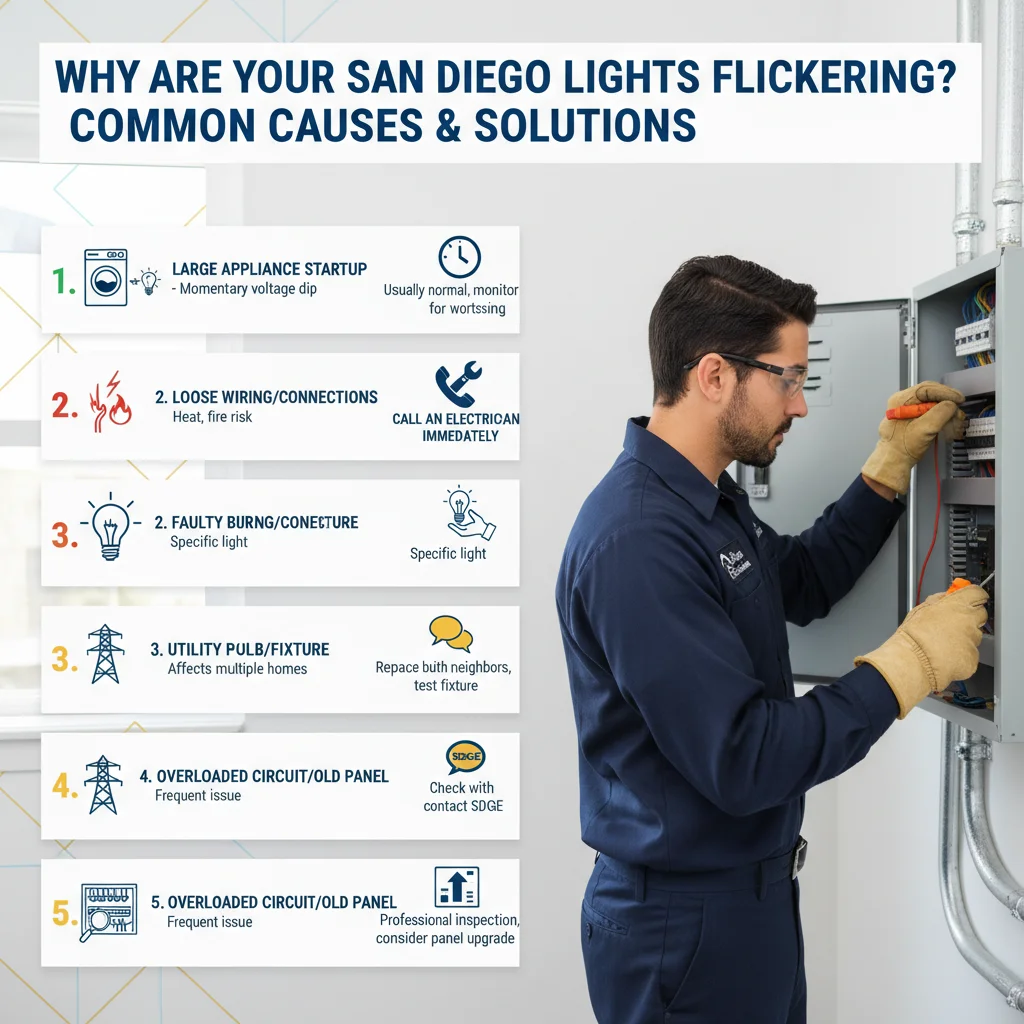
One of the most frequent reasons San Diego homeowners notice their lights flickering is the startup of a large appliance. Think about those moments when your refrigerator compressor hums to life, your air conditioner cycles on, or your washing machine begins its spin cycle. These appliances draw a significant amount of electricity in a very short burst when they activate. This sudden demand can cause a momentary dip in voltage across your home’s electrical system, resulting in a brief flicker or dimming of your lights.
This phenomenon is usually harmless and is more noticeable in homes with older electrical panels or circuits that are nearing their capacity. Modern homes with robust electrical systems might not experience this as often, but it’s still possible. If the flickering is only momentary and coincides precisely with the startup of a large appliance, you probably don’t have a serious electrical problem. It’s simply your home’s electrical grid responding to a powerful load.
You can often test this by paying attention to when the flickering occurs. Does it happen every time the fridge kicks in? Only when the microwave runs? If you can consistently link the flickering to the operation of a specific high-power appliance, it’s likely a normal voltage dip. However, if this temporary dip seems to be getting worse, more frequent, or involves multiple lights flickering severely, it might indicate your electrical system is under increasing strain or that you might need a dedicated circuit for that particular appliance.
Loose wiring in the circuit or panel
While appliance startups are common, loose wiring is a more serious and potentially dangerous cause of flickering lights. This isn’t something you can easily diagnose or fix yourself, as it involves the core of your home’s electrical system. Loose connections can occur at various points: within the light fixture itself, at a wall switch, at an outlet, inside the electrical panel, or even along the circuit wiring in your walls.
When wiring is loose, it creates resistance, which generates heat. This heat can melt insulation, damage components, and in severe cases, lead to an electrical fire. Symptoms of loose wiring often include persistent flickering (not just momentary), lights that go completely out and then come back on, or flickering that seems to affect an entire room or circuit. You might also notice a burning smell, discolored outlets or switches, or hear buzzing sounds coming from light fixtures or walls. If you’ve also been experiencing an electrical breaker keeps tripping, it could be related to these underlying wiring issues.
Loose wiring in your main electrical panel is especially critical. The panel is the heart of your home’s electrical distribution, and any issues there can affect your entire house. Older homes in San Diego, especially those built before the 1970s, might have older wiring or panels that are more susceptible to loose connections or corrosion over time. If you suspect loose wiring anywhere in your home, it’s vital to contact a qualified electrician immediately. They can safely inspect and tighten connections, replace damaged wiring, or recommend a complete electrical panel upgrade if your existing panel is outdated or unsafe.
Problems with the utility service (SDG&E)
Sometimes, the source of your flickering lights isn’t even inside your home; it’s outside, with your utility provider, SDG&E. While less common, issues with the power coming into your house can definitely manifest as flickering lights. This could be due to a problem with the service line connecting your home to the power grid, a faulty transformer in your neighborhood, or broader issues affecting the local power distribution network.
If the flickering seems to affect all the lights in your home, and perhaps even your neighbors are experiencing similar issues, then it’s highly likely a utility-side problem. You might notice your appliances behaving strangely, or your entire home’s power cutting out intermittently. A quick check with your neighbors can often confirm if the problem is localized to your home or more widespread. You can also visit SDG&E’s outage map online or call their customer service to report the issue. They can often provide information about local outages or dispatch a crew to investigate problems with their service lines.
While you cannot fix utility-side problems yourself, it’s important to differentiate them from issues within your home. If SDG&E confirms there’s no problem on their end, then the focus shifts back to your internal electrical system. However, if the flickering is indeed coming from the utility, it’s crucial to report it. Utility companies are responsible for delivering stable power to your meter, and they will typically address issues on their side promptly. If they discover the problem is at the point where their service connects to your home’s meter, an electrician might need to perform repairs on your side of the connection after the utility has secured the power.
What an electrician checks to diagnose the issue
When you call Bright Pro Electric for flickering lights, our licensed San Diego electricians follow a systematic approach to pinpoint the exact cause. We don’t guess; we test and inspect every component to ensure a thorough and accurate diagnosis. Here’s what you can expect us to check:
First, we’ll talk to you about the history of the flickering. When did it start? Is it constant or intermittent? Does it happen in specific rooms or with certain appliances? This initial conversation provides valuable clues.
Next, we’ll perform a visual inspection of your electrical panel. We’ll look for signs of corrosion, loose wires, burnt components, or any indication of a tripped main breaker. We’ll also check the connections to the main service entrance to ensure they are secure and free from damage. An aging or overloaded panel often contributes to flickering, and sometimes a panel upgrade is the best long-term solution.
Using specialized tools like multimeters and voltage testers, we’ll measure voltage levels at the service entrance, the electrical panel, and individual circuits. Voltage drops or fluctuations can indicate problems with the utility service, overloaded circuits, or loose connections. We’ll test individual outlets, switches, and light fixtures in the affected areas, checking for proper wiring, secure connections, and correct voltage output.
We also consider the types of lights you have. If you’ve recently switched to LED lighting, we’ll check for dimmer compatibility issues or faulty drivers within the LED fixtures themselves. Our goal is to rule out minor issues before moving on to more complex diagnostics. By meticulously checking each part of your electrical system, we can accurately diagnose whether the problem is a simple fix, a wiring issue, or a sign of a larger system inadequacy, providing you with a clear explanation and a recommended solution.
Why you shouldn’t ignore persistent flickering
While a momentary flicker caused by an appliance startup is generally harmless, persistent or severe flickering lights are not something to dismiss. Ignoring these symptoms can lead to serious consequences for your home and your safety.
For starters, continuous voltage fluctuations can damage your sensitive electronics and appliances over time. The constant on-off or dim-bright cycles put stress on their internal components, shortening their lifespan and potentially leading to costly replacements. Beyond property damage, the most critical concern is safety. Flickering lights often signal underlying electrical problems like loose wiring, frayed insulation, or overloaded circuits. These issues can generate excessive heat, increasing the risk of electrical fires. In fact, faulty wiring and overloaded circuits are common causes of residential fires in San Diego and across the country.
Furthermore, a compromised electrical system can lead to electrocution hazards if connections are exposed or not properly grounded. It can also be a sign that your home’s electrical infrastructure is simply not adequate for today’s power demands, posing a risk not just for flickering, but for frequently tripping breakers and other power interruptions. Proactive maintenance and timely repairs are key to preventing these hazards. If you notice any unusual electrical behavior, especially persistent flickering, a burning smell, or buzzing sounds, it’s always best to err on the side of caution and call a professional. Investing in a professional inspection from Bright Pro Electric gives you peace of mind and protects your home and family.
When to call us
If your lights are flickering persistently, you hear buzzing, smell burning, or you’re simply unsure about the cause, it’s time to call a licensed electrician. Electrical issues can be complex and dangerous to troubleshoot without proper training and tools. Call us at (858) 925-5546 for a same-day estimate.