You’re adding an EV charger, replacing the gas furnace with a heat pump, or just tired of tripping breakers every time the microwave and air fryer run at the same time. At some point the question lands: do I actually need a 200-amp panel? The answer depends on what’s already in your house and what you plan to add — not on a rule of thumb someone posted in a Facebook group.
What a 200-amp service actually gives you
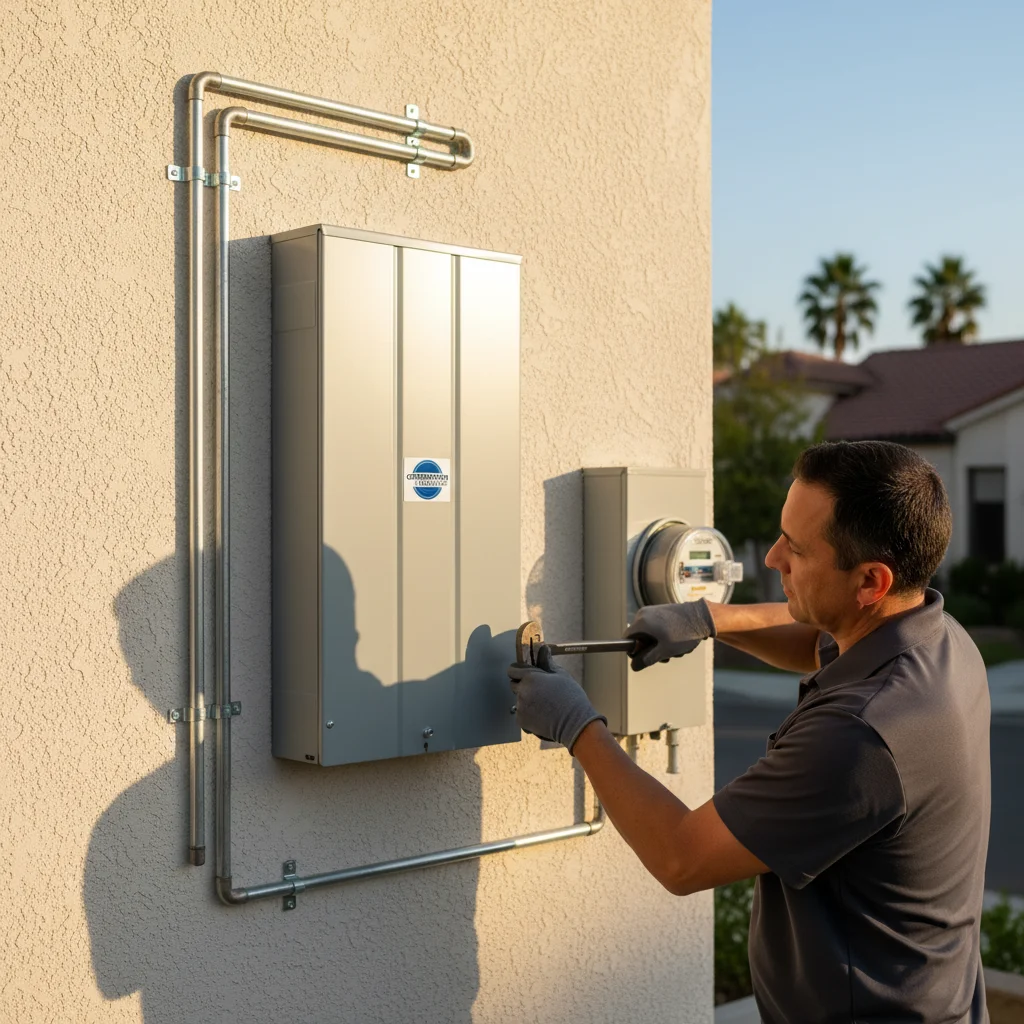
Amperage is capacity — the ceiling of how much power your house can pull from the grid at one moment. A 200-amp service at 240 volts delivers up to 48,000 watts of potential load. In practice, you never hit that ceiling all at once, but it gives you meaningful headroom.
Most San Diego homes built before the mid-1980s landed with 100-amp service, sometimes 125-amp. That was fine when the biggest draws were a central AC, an electric range, and a water heater. It’s less fine in 2026, when a Level 2 EV charger alone pulls 40–50 amps continuous.
A 200-amp panel also means more physical breaker slots. Older 100-amp panels often top out at 20–24 spaces, and contractors end up using tandem breakers to squeeze circuits in. More slots means cleaner wiring, easier future additions, and no more playing Tetris with the breaker directory.
One more thing: if your home is on a loan or going up for sale, many lenders and buyers now flag sub-200-amp service as a deferred maintenance item. Upgrading to 200-amp service through a panel upgrade is a hard capital improvement — not just a comfort measure.
Signs your 100-amp or 125-amp panel is maxed out
Panels don’t send a calendar invite when they’re full. Instead, you get subtler signals.
Breakers trip on normal loads. If the kitchen circuit trips when the coffee maker and toaster overlap, the panel isn’t oversized for your lifestyle. That circuit may be undersized, but if it’s happening across multiple circuits, the service itself is strained.
You’ve run out of slots. A contractor quotes you a new circuit and says “we’ll have to use a tandem” — that’s a sign the panel is full. Doubling up breakers is legal in panels rated for it, but it’s a workaround, not a solution.
The utility meter is maxed at 100 amps. SDG&E meters out to 100 amps on a 100-amp service. If your electric bill shows demand charges or you’re hearing from neighbors that you’re pulling hard during peak hours, the service is likely undersized for where your home is headed.
You’re adding a major load. This is the clearest trigger. One big addition — an EV charger, a pool pump, a heat pump system — can push a 100-amp panel past its comfortable operating range. That’s when you stop asking “is it time?” and start asking “how fast can we schedule this?”
The panel is old enough to vote. Panels older than 25–30 years may have breakers that no longer trip reliably under fault conditions. That’s a separate safety issue — worth reading about in our guide to Federal Pacific and Zinsco panels if yours is one of those brands.
EV chargers, heat pumps, and induction ranges: load math
This is where the sizing decision gets real. Let’s walk through a simple load calculation for a typical San Diego household considering a 200-amp upgrade.
Sample home load calculation
Assume a 1,800 sq ft home in Santee or El Cajon. Here are the major continuous or high-draw loads:
| Load | Amps (240V) |
|---|---|
| Central HVAC (3-ton heat pump) | 20A |
| Electric water heater | 18A |
| Level 2 EV charger (48A circuit) | 40A continuous |
| Induction range | 40A |
| Dryer | 24A |
| Lighting + general outlets | ~15A |
| Total | ~157A |
A 100-amp panel cannot support that load, even with demand diversity factored in. The NEC’s standard load calculation method applies demand factors — you don’t add every number at face value — but even after the math, this home lands well above 100 amps.
At 200 amps, you’ve got room. At 150 amps, you’re still tight if the EV charger is running while dinner cooks.
The EV charger is often the tipping point. As we covered in detail in the EV panel upgrade bottleneck post, a 48-amp Level 2 charger draws 40 amps continuously — the NEC requires circuits to be sized at 125% of continuous load, which is why it needs a 50-amp breaker and an 8-gauge wire minimum. Drop that into a 100-amp panel that’s already running an HVAC and a water heater, and you’re out of usable capacity before the car is fully charged.
Heat pumps are the other common culprit. San Diego’s mild winters make heat pumps an excellent swap for gas furnaces — the California Energy Commission has been pushing electrification hard — but a 3-ton heat pump system draws 20–25 amps continuously. Combined with an EV charger and induction cooking, the math almost always lands at 200 amps or more.
Cost to upgrade in San Diego in 2026
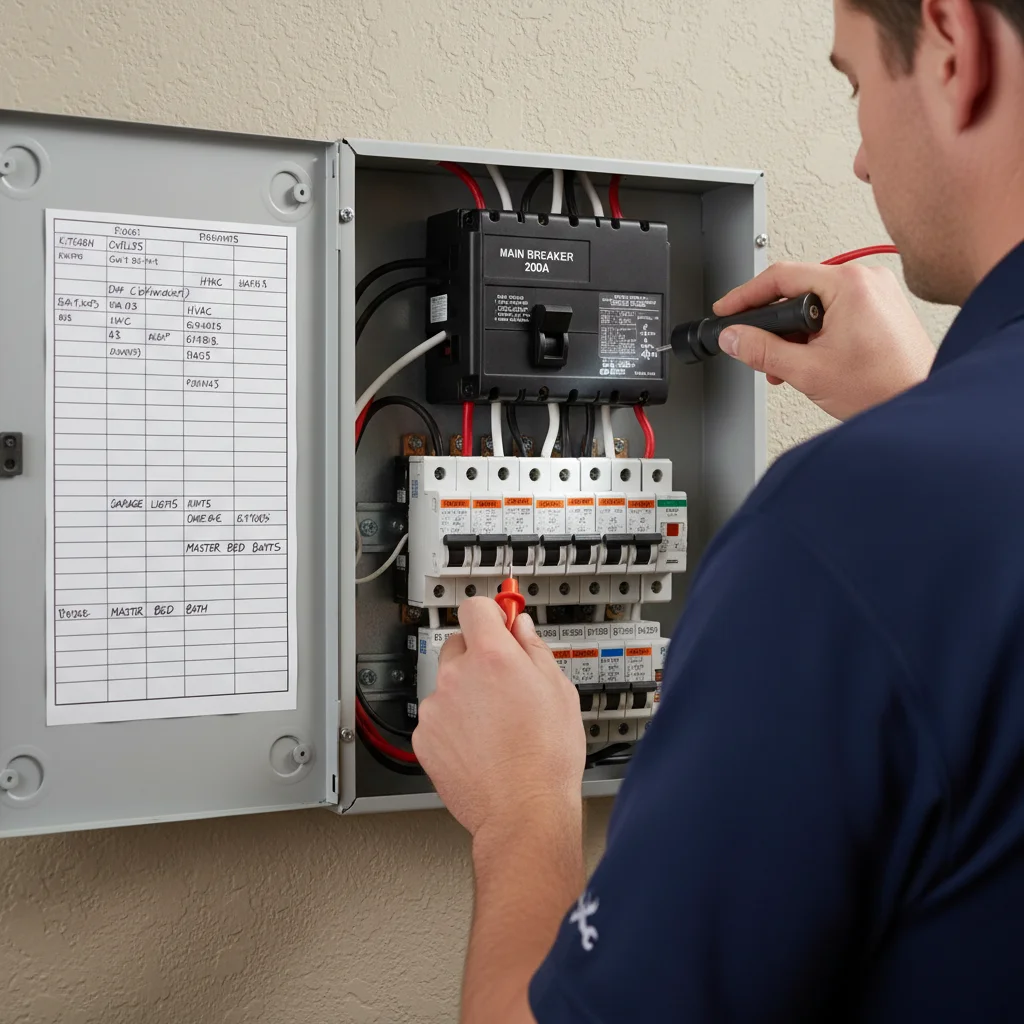
A 200-amp panel upgrade in San Diego County runs roughly $3,500–$7,500 for most residential jobs in 2026. The wide range reflects real variables: panel location, whether SDG&E needs to pull and reset the meter, how much conduit needs to run, and whether the existing wiring needs any remediation.
Jobs on older homes in neighborhoods like North Park or Kensington — where panels are often in tight interior closets or require longer runs to the meter — tend to land higher. Newer construction in Chula Vista or Otay Ranch, where panels are on exterior walls with short meter feeds, can land lower.
For a more detailed cost breakdown, including what drives quotes up or down, see our panel upgrade cost guide for San Diego in 2026.
One note: don’t skip the permit. Unpermitted panel work voids your homeowner’s insurance and creates problems at resale. Every legitimate quote from a licensed San Diego electrician will include permit fees in the number.
Permits, SDG&E coordination, and downtime
Panel upgrades in San Diego County require a permit through your local jurisdiction — the City of San Diego, or the appropriate city or the county if you’re in an unincorporated area. The permit triggers an inspection, which is the check that confirms the work was done to code.
SDG&E coordination is the piece most homeowners don’t expect. When the service size changes, the utility needs to pull the meter before work starts and reset it after the inspection passes. That coordination adds time — typically one to three business days for scheduling in each direction. A good electrician handles all of this communication directly with SDG&E so you’re not making calls.
Expect your power to be off for four to eight hours on the day of the upgrade itself. Most jobs are scheduled to start at 7 or 8 a.m. so power is restored before afternoon. In San Diego’s climate, that’s rarely a hardship — but if you have a medical device that requires continuous power, flag that during the estimate so the crew can plan accordingly.
Total timeline from permit application to final inspection usually runs two to four weeks. If your project is time-sensitive — you’ve already ordered a charging station, or your new appliances are being delivered — book the electrician before the equipment arrives, not after.
When 400-amp or load management makes more sense
200 amps handles most single-family homes in San Diego. But there are real situations where it’s not the right answer.
Two-unit properties or ADUs. If you’re adding a full ADU to your lot, that unit needs its own subpanel and its own load allocation. A 200-amp main service split two ways can get tight. Many ADU projects on existing properties end up at 400-amp service or with a separate meter request to SDG&E.
Multiple EVs. Two Level 2 chargers, each on a 50-amp circuit, consume 80 amps of capacity before you account for anything else in the house. That’s workable on 200 amps with load management, but it’s worth modeling carefully.
Smart load management as an alternative. If your panel is newer and in decent shape but running close to capacity, a smart panel or EV charger with load management built in may stretch your existing service further. Chargers with dynamic load sharing — like those from Chargepoint or SPAN panel systems — reduce draw automatically when other loads spike. This won’t help if your panel is physically full or aging, but it can defer an upgrade by years in the right situation. Check SDG&E’s rebate programs — some smart panel and EV charging incentives are still active in 2026.
Future-proofing for solar + battery. If a battery backup system is in your five-year plan, 200 amps is usually sufficient, but the panel needs the right breaker slots and configuration. Worth discussing during the estimate so the contractor sizes and positions things correctly from the start.
When to call us
Panel sizing is the kind of decision that sounds straightforward until you get into the actual load numbers, the permit process, and the SDG&E coordination involved. If you’re running close on a 100-amp panel, adding a major load, or planning electrification upgrades over the next few years, a licensed electrician should walk your home before you commit to an approach. Call us at (858) 925-5546 for a same-day estimate.